Languages!!

by Cindy Vaquero and Liliana Cardoso 

Throughout Ecuador’s history, and even today,  many different languages have been and are spoken, believe it or not. Did you know that there are about ten native languages in Ecuador? Although, there may be many languages, Spanish is the most common language spoken in Ecuador. People who live in the mountains prefer to speak Quichua (Kichwa) -an language spoken by the Indians of the ancient Inca Quechua tongue. Most mountain people will most likely speak Quichua or a rare language that isn’t Spanish. quechua_event_fotoThere are many tribes in Ecuador that had their own language; in the rainforest area of northwestern Esmeraldas on the northern coast of Ecuador, people spoke a language called Cha Palaa and were known as the Chachi people. In Huasaga, Ecuador, many people would speak Achuar-Shiwiar along the Pastaza province and Bobonaza river. Ecuadorians also have Ecuadorian Sign Language -a language for the deaf. 30% of the signals are american signs and 20% are derived from spanish sign language, all mixed together to make ecuadorian sign language. The Secoya and Siona villages also had their own language, Paicoca, in the Amazon basin.

Many of these languages weren’t just spoken by Ecuadorian people, they were also spoken in other countries such as Peru. Now as tourists travel the world, we see that most speak English; therefore, many schools in Ecuador are having English as a language requirement. However, Ecuador is still strongly influenced by the indigenous languages of the region.

There were many more languages that existed before, became “extinct;” when less than 100,000 people speak a language, it becomes endangered.

What is important to recognize is that the culture in Ecuador is diverse and that lends to the richness of the country.

Posted in Uncategorized | Leave a comment

Traditions in Ecuador

by Elise and Addison

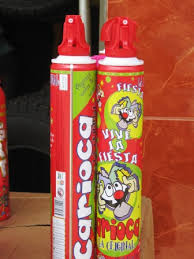
When most people hear the word Carnival, they think of the the world-famous Brazilian celebration, but instead this festival is celebrated in a lot of other Latin countries as well. Although they have the same name, both of these parties are very different.  This festival is 40 days before Easter prior to the catholic fasting period.  Carnival was basically a time before Lent that allowed the catholic people to go crazy and eat and drinkcarnival as much as they wanted because they wouldn’t be allowed to during their fasting period.  The main event of this party is drenching every visible human being with some sort of liquid.  Being beer, water, or a type of playful, colorful foam called Carioca.  The downside of this celebration is that this sort of thing can sometimes get out of hand and taken to a savage level.  On the days leading up to Carnival, there are T.V announcements urging people to play nice and be courteous to innocent civilians.  There are also nice concerts, different types of food trucks and other ways of celebrating Carnival.  We won’t be there for this part in the Ecuadorian year, but it sounds like a lot of fun.  

CariocaOne of the more notable traditions in Ecuador is the Day of the Dead, which is celebrated every November 2nd. The Day of the Dead is a memorial to loved ones who have died and gone to what is known as “The beyond”. Families in urban and rural areas pr

epare “colada morada,” made from black corn flour and fruits, as well as “Guaguas”, which is just bread molded into the shape of a child. These treats are shared in cemeteries to celebrate those who have passed on and those who still live. Sometimes, some people will clean and decorate the graves of their loved ones as a sign of love and respect. On the way to the cemeteries, Businesses and vendors will be there, selling all kinds of treats, such as candies, flowers, candles, and food. While outsiders might view this as a morbid tradition, the people of Ecuador consider it to be a celebration of life.

Posted in Uncategorized | Leave a comment

The Promise of Technology for Young Students

by Ignacio Salim and Jason Solis

Volunteering at Casa Victoria will not only give us a chance to inform our perspective in helping our community, but will also give us a chance to have a lasting impact on students in Ecuador.  In researching the youth who live in the section of San Roque, we found that there is a lack of technology, preventing students from continuing their education and achieving their full potential. Little technology isolates students and limits their perspective in the world. Increasing access to technology, students can understand the basic platforms, gaining a better edge when pursuing their careers. As a group, we began to explore what pieces of technology might be most effective for these students to gain an understanding of the basics of programming and robotics. Since many of us are instructors who teach structural programming to students in grades 2-8, we know that block-based programming can really teach students the analytical mindset needed for solving real world problems.

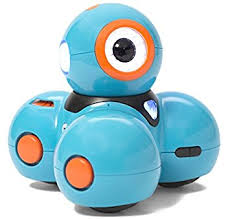
So we plan to brindashg robots with us to Casa Victoria to allow students to pursue this. For example, the dash robots, using blocks to program, can serve as an excellent tool for acquiring basic block programming skills.


wowweeAnd for younger students, we plan to bring WowWee robots that use emoji’s and other images to program the robot.We also plan to bring a printer for students to be able to move what is virtually on their computer into their hands, allowing for increased creativity.

Inviting these students to explore this technology will build the stepping stones for their lives and plant seeds for future success as they discover new interests in a world filled with technology.

Posted in Uncategorized | 2 Comments

Community Problem Solving: 7 things we learned along the way

We all want our students to be active, engaged citizens, but how do we invite them into issues of equity and civic engagement beyond the walls of the classroom?  As English Language Arts educators who are dedicated to helping our students become advocates for issues of social justice, we have been struggling with this question for years.  To complicate matters, our city was once a flourishing city on the Hudson River, but like many cities up and down the east coast, deindustrialization has left Newburgh with an increasing juvenile incarceration rate, entrenched drug and gang issues, and high poverty levels.  This past October, we sat working in a newly renovated cafe, just blocks away from where two students were shot and killed at a party a week earlier; our conversation turned to the gentrification happening in Newburgh.  

Local businesses, community leaders, and organizations in Newburgh have been working diligently to better our city, and while we wholeheartedly support the needed revitalization efforts, we worry about our students and their families, who might not be able to remain in a city where rents are steadily increasing.  We also fear that efforts to improve the city overlook the interests and voices of the residents who are already here.   We knew we needed to invite our students to learn about the changes our city was experiencing and find a way to insert their voices in the ongoing conversations about the future of Newburgh.  

Global to Local is a service-learning program we started to do just that.  As we work alongside our students to shape the program, we are learning some powerful lessons about community engagement, student voice and real-world learning.  

1. Think Big  As avid travelers ourselves, we know firsthand the power of immersing ourselves in a foreign culture.  We initially began Global to Local with the idea that inviting students to volunteer abroad would help them look at our own city with a new perspective.  We thought that if students could feel empowered to work for change in a foreign country, they could take that momentum back to our city and find ways to become change makers in our own city. We started searching out grant funding that might allow us to set up a partnership for travel because we did not want cost to be a prohibitive factor for our students.

2. Look for a Concrete Outcome Since our overarching goal was community engagement in Newburgh, we didn’t want the work our students did to be a one-shot travel experience. We brainstormed ways to create opportunities for students to use the knowledge, skills and dispositions gained to work for community betterment in our own city upon their return.  After conversations with community members and researching other programs, we came up with Community Impact Projects that would be undertaken by all 12th grade students in their senior year.  The students who were selected to volunteer abroad during the summer before 12th grade would act as project managers for the Community Impact Projects.  By creating this concrete expectation, the program shifted from a ten day commitment in another country to a full year, with the main focus on our city and the changes the students could help facilitate in Newburgh.

3. Let your vision evolve As educators, we were fortunate to secure a Fund for Teachers grant to travel to Ecuador during the summer of 2017 to scout out locations. We spent a few days volunteering through a company that partners individuals with local organizations.  As we painted murals at a local school during summer recess, we realized that we felt isolated from the local community we sought to serve.  Then we were invited to Casa Victoria, a grassroots after-school program serving sixty students in Quito.  We realized that if we partnered directly with this program, our students could work with the young people there, teaching them basic robotics and coding, playing games, and replenishing the small library.  Casa Victoria’s vision was more closely aligned with our objectives, and as we discussed the leap of faith that we would be taking by working with Alicia instead of traveling through an established company, we also realized that she offered a prime example of how citizens can work to change their own community.

4. Invite students to the Planning Table Before we even left for our scouting trip to Ecuador, we met with our entire tenth grade class and invited them to follow our trip on our blog.  They were able to ask questions, see some of the sights, and witness the evolution of the murals we painted.  They were also in a position to advocate for themselves when we came back and laid several program options on the table.  Students were adamant that they wanted to feel like they were making an impact through creating human connections, and they encouraged us to move forward in planning a partnership with Casa Victoria.

5. Let the Community Know Over the past year, we have met with countless local non-profits, hoping to create excitement for the Community Impact Projects, during which we hope to establish smart partnerships to work towards our shared goals.  We have also gotten students out into the community, where they have talked to local business owners, assisted at volunteer events for other organizations like Habitat for Humanity, and spread the word at the farmer’s market. We believe the more they talk publically about their goals, the better they become at articulating why this program will help them become empowered to be agents of change.

6. Remember the Importance of Shared Leadership We try to model for our students how collaboration not only strengthens our ideas, but also makes it possible for us to divide and conquer as we pursue our goals for Global to Local.  Without our collaborative efforts, we would never have established our partnership with FLYTE, who is generously supporting our students’ travel with their amazing non-profit.  Our students will be practicing shared leadership in the fall as well, as they enact their Community Impact Projects, and part of our work leading up to those projects is helping them learn to position themselves as leaders who listen and value the input of others.

7. Persist The process of making this dream a reality hasn’t been simple.  We have written countless grant applications, and waited two years to take our first research trip until we could secure the funding.  We have struggled, at times, to manage the complicated logistics of fundraising for and planning an overseas trip while teaching full time. We know we will have to help our students navigate the roadblocks they will encounter as they take on roles as change agents in our city, but we hope that we serve as role models of persistence and optimism.

As we get ready to board a plane to Ecuador in 5 weeks with our fifteen students and three dedicated colleagues, we are so grateful that so many people and organizations have supported our vision and helped to make our plans a reality for our students.  We hope that a year from now, as our students prepare for a summer of college classes, they are able to envision themselves as change makers and advocates for themselves and our community.  We hope that they see themselves as people who can make the world a better place.

Posted in Uncategorized | Leave a comment

A Changed Mindset: The World as our Classroom

This post is pinned…for the newest posts, please scroll down.

You can check out this original post on the FLYTE blog 

by Jackie Hesse and Christine McCartney

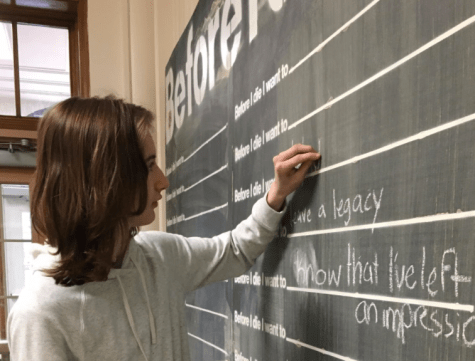
As students enter the halls of our school, they are greeted by two chalk boards with the words “Before I die…” at the top, inspired by the work of Candy Chang. Students often write about the places in the world they would like to visit and goals they would like to accomplish, from gaining fame and fortune to making the world a better place.  Our program, Global to Local, grew out of our desire to help students empower themselves as change makers, especially because high school is a time when many teens feel disempowered.  Less than three months away from our service learning trip to Ecuador, we invited students in our program to write new “Before I Die” statements.

Brendin: Before I die I want to know that I have done something to leave an impression upon the world.

Screen Shot 2017-05-15 at 4.33.56 PM

Last August, we stood in the warm Ecuadorian sun and looked over the four days worth of murals we had just finished painting at a school near the capital city of Quito.  Still holding our dripping paint brushes, we had a defining moment in our work towards building a meaningful global service learning program for our students.  When we tried to articulate how our students, after engaging in a similar volunteer experience abroad, might use the knowledge and skills they gained to facilitate community impact projects in our own struggling city of Newburgh, New York, we were at a loss.  Sure our students would see another culture and have an opportunity to engage with people whose perspective of the world was different from theirs.  But as educators who often think about how to help our students feel empowered to create the positive change our city desperately needs, we saw a wide disconnect between painting murals and the leadership skills and vision we wanted our students to gain to be able to act as change agents when they return to Newburgh.

Liliana: Before I die I want to be someone’s role model and inspire them to do great things in life.

At this realization, we knew we needed a new plan. When our friend Karen suggested a quick trip to the other side of Quito to meet her friend at Casa Victoria, we had no idea that this two hour visit would alter the entire trajectory of our work.  Alicia, the inspiring woman who runs this grassroots community organization, recognizes that the youth in the area in which Casa Victoria is located are oftentimes lacking the supports needed to develop into productive, honest and self-sufficient members of their community.  In an effort to counteract this, she has slowly built a program at Casa Victoria that provides academic help, social support and hot meals to the youngest members of the local community of San Roque.  

Cindy: Before I die, I want to succeed in helping communities from all over the world grow into safe and loving communities.

As we think about the future and what authentic service learning looks like, we wonder how bringing students to a place like Casa Victoria might provide a more powerful experience than something like painting murals. What impact will it have for our students to learn first-hand from the experience of seeing a woman who recognized that she could no longer wait around for her community to improve…she had to be the change herself?  How might it change how they envision themselves and their roles in the city of Newburgh?  These questions represent a changed mindset for us as educators- a mindset that drives us as we work with students to dream this program into being; our most crucial work with students must happen beyond the walls of our classroom.  Yes, our students see their degrees as the foundation of success for their futures, but it is also clear they now recognize education as an avenue to learn about themselves and the world.

Screen Shot 2017-05-15 at 4.34.46 PM

We are excited as we look forward to the fall, when our students will brainstorm together which local issues they hope to address through their Community Impact Projects.  They will form partnerships with local organizations, and step into leadership roles that they may never have imagined for themselves.  We don’t know exactly what to expect, but we know that our students have both the potential and the desire to make their community a better place.

Maribel: Before I die I want to help others to achieve their goals.

Thanks to the generosity of FLYTE and Nomadic Matt, on June 24th, twenty Excelsior students and staff members will be boarding a plane, beginning what promises to be an amazing adventure.  Because of our partnership with FLYTE and its dedicated staff, our students will be able to travel, some of them for the first time, to a foreign place to see an inspiring example of grassroots community organizing.  We will carry with us a desire to learn from and with the staff at Casa Victoria.  We will leave behind robots and tablets, a new outdoor learning center, and books for Casa Victoria’s library.  We will return to the United States as changed people.

Elise:  Before I die, I want the world to be as good as I thought it was when I was younger.  When we spread love and happiness in different parts of the world and share ideas and skills, the world can be better.  

Posted in Uncategorized | 3 Comments

Habitat Walk

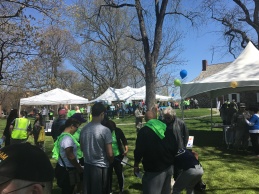
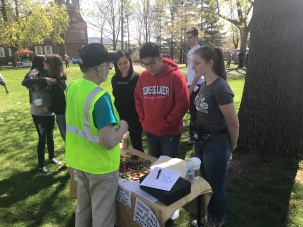
IMG_2639Our day began at the Washington Headquarters in Newburgh, NY where students (about 30) attended the annual Habitat Walk for Housing. Hosted by Habitat Newburgh, which continues to build homes, communities and hope, we participated in their advocacy event to bring attention to the issue of substandard housing here in Newburgh.IMG_2640

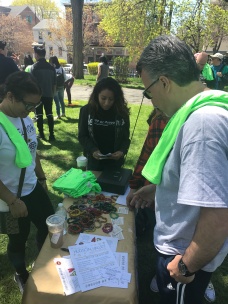
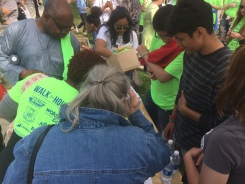
Out in the beautiful weather, we set up a table that displayed Tagua Nut bracelets from Ecuador, the Best of Hudson Valley Basket Raffle tickets, and About Us handouts.

At the event, students from Excelsior Academy conversed with local and widespread community members about our goal and vision as young leaders to better our community.

IMG_2638

Excelsior students, Alejandro Juarez and Elise Goings-Perrot, talking to local volunteer for the Habitat Walk.

IMG_2641

Co-Principal Matteo Doddo, providing his support and chatting with excelsior students, Taina Caballero and Cindy Vaquero.

IMG_2647

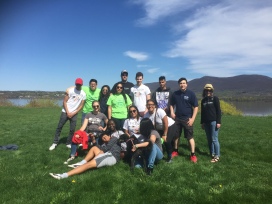
Half of the students who participated in the Habitat Walk taking a group photo. Other students were walking and engaging with the community.


IMG_2645

Excelsior Students, Maribel Ramos (with sunglasses in the center), Alejandro Juarez (with the red sweater on his shoulder, and Jason Solis (with black and grey shirt) speaking to community members about the free trade Tagua Nut bracelets from Ecuador.


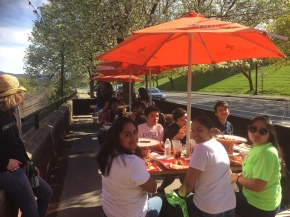
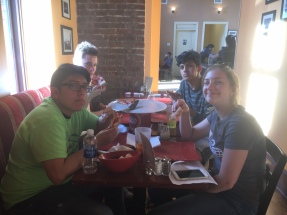
After the Habitat Walk, students concluded their volunteering efforts and services with outstanding food at the Pizza Shop located in the Newburgh Waterfront.

IMG_2644IMG_2643

Posted in Uncategorized | 2 Comments

about the program:

Here is a video we made for USA Today’s A Community Thrives Grant competition.  The video will tell you about our program and if you are so inclined, you can vote for us here.


Posted in Uncategorized | Leave a comment

Ecuadorian Food

By: Maribel and Taina

 Ecuador enjoys putting its own twist on South American favorites, as well as making some pretty unique dishes of its own.  Ecuadorian food is diverse and underrated.  With three different regions in the mainland – coast, highlands, and rainforest – the typical cuisine varies across the country with delicious regional specialties and different typical dishes in the sierra and the coast.  Unlike other Spanish root country’s food in Ecuador is generally simple but tasty and rarely spicy.

food (1)

Across the country you’ll find a broad spectrum of national and regional dishes, including shrimp, toasted corn and pastries stuffed with spiced meats. No matter where you go, rice seems to be a staple part of the diet, since it’s usually served with almost everything. If you’re feeling a bit courageous, you may even put yourself to test with roasted cuy (guinea pig). 

image (3)

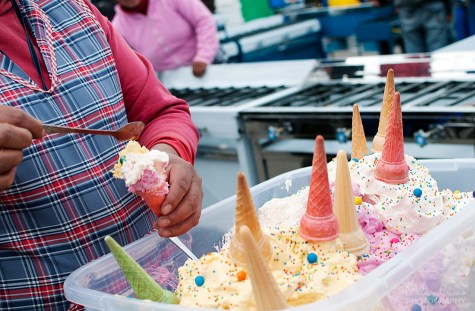
Ecuador is also known for its fabulous exotic fruits, high-quality fish and seafood, and the countless varieties of Andean potatoes. Ecuadorian food may not have the greatest reputation but there’s still a range of traditional Ecuadorian dishes we’ll like to try .  Something we’ve been excited to try out is a mouth-watering dessert called Espumillas. The word espumillas means “little sponge” in Spanish, and refers to what most people know to be  “meringues.” At first glance you would assume it’s ice cream but it’s actually just guava meringue cream served at room temperature . 

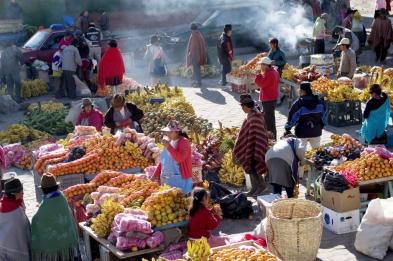
For those on a budget, the best way to stretch your money would be to visit street markets. In my recent travels I’ve noticed it’s a big risk (hygiene), but a good rule to probably follow would be the “locals rule” -if the place is frequented by many locals, the food probably merits joining the crowd. As a frequent flyer to Mexico, I’ve always enjoyed embracing all of the culture that surrounds a market in such an amazing way, so I can’t wait to embrace Quito’s diverse markets.  

soup

Our destination of choice, Quito,varies in typical foods. Meals are often dependent on the city’s inhabitants and their surroundings. A major staple in Quito includes Lucro, a thick stew containing classic corn, beans, and potato or pumpkin. This dish is often served with an avocado,  a highly sought after vegetable in Latin countries.  As we get closer to our  departure date (3 more months!!) we get more and more excited for this delightful opportunity.


Posted in Uncategorized | Leave a comment

The Amazon Rainforest

By Elise and Alejandro

Size

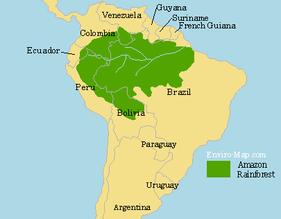
Most people understand the Amazon is the largest rain forest on earth.  The rain forest is approximately 2.72 million square miles. amazon_forest The Amazon rain forest is actually a basin, and home to low lands, and high-lands;melting glaciers have also played a part in the increase in low lands in the Amazon
Amazon River

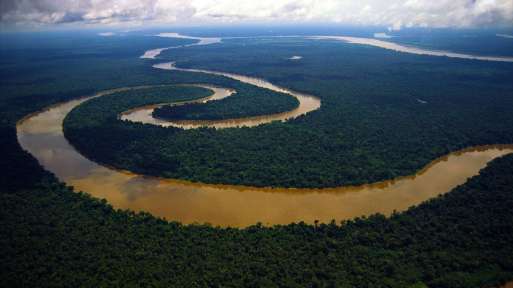
The Amazon extends more than 4,000 miles. This is the same distance from New York City to Rome! The river goes from the Pacific to the Atlantic(We will be on the Pacific side of South America). The Amazon River is also home to piranha, and giant anacondas that can grow to lengths of over 30 feet! Amazon.River.original.2310.jpg

Wildlife

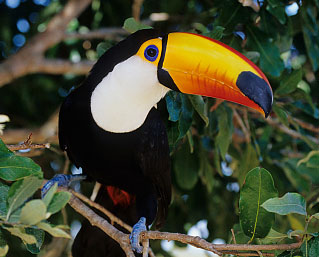
In the rain forest the most thought of creatures are monkeys and colorful birds.  The Toucan is a large bird very well known from the Amazon; with their big colorful beaks they are not hard to miss. There are over 10 million species of animals located in the Amazon rain forest.tocotoucan2

We are hoping to get to experience the Amazon first hand while in Ecuador. When we have free time from volunteering, we plan on going hiking in the rain forest, and exploring one of nature’s greatest gifts. We are only three months away!

Posted in Uncategorized | Leave a comment

The Equator

By Alejandro Juarez

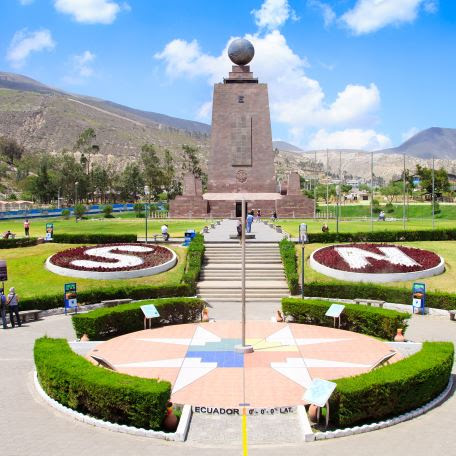
Ecuador is very unique as it sits in a spot that separates the northern and the southern hemispheres. The Republic of Ecuador in Spanish means “The Republic of the Equator.” We are traveling to the capital of Ecuador, Quito, which sits in the middle of the two hemispheres, and allows for some very cool experiments. 929

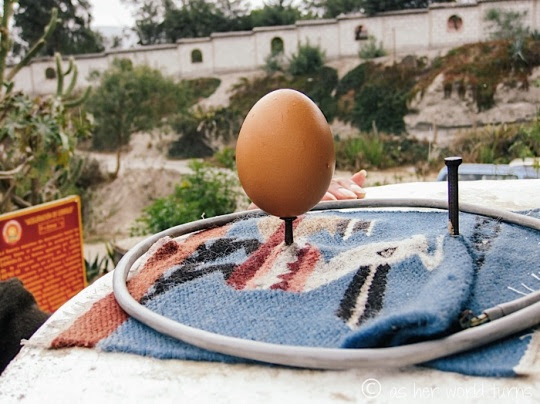
This is one the things we will attempt to try while in Quito, which is balancing an egg. Because of the Earth’s magnetic polarity, an egg can be balanced on the equator. While there, we will visit the monument Mitad del Mundo. Which was constructed in the late seventies. It stands as a split in an enormous world.

f1ee2d73-a310-4607-9fb3-b5a8d15bfd46_tcm493-551018_456x456_80It is accompanied by a garden,  places to sit and take nice photos. It is noted that the line that the park has mapped out is not actually the real equator. This was due to a ravine that was in the way, so the park had to be constructed else ware. We will surely test it with our GPS when we are at the Middle of the World.
As we get closer to our departure date, we get more and more excited for this adventurous opportunity.

Posted in Uncategorized | Leave a comment