The Foundation for Learning and Youth Travel Education (FLYTE) is a nonprofit organization with a mission for students. Their goal is to expand students’ cultural, academic, and social horizons by providing schools with the resources needed.
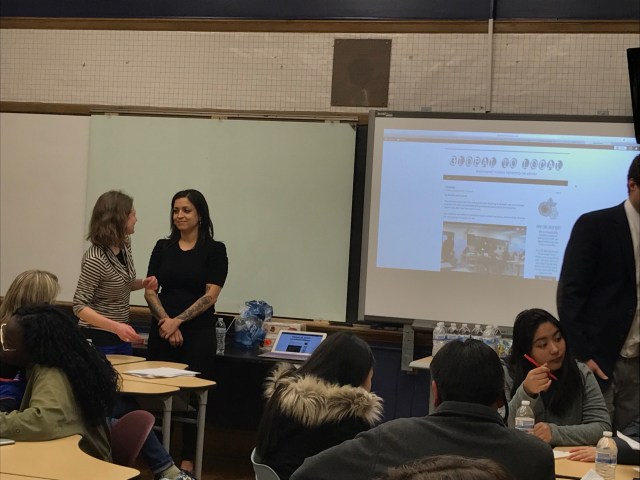
This year, we at Excelsior Academy, were lucky enough to be the high school selected to travel abroad! We recently had the honor to meet Courtney Dalton, Executive Director and Co-Founder of FLYTE. A brief meeting took place where we introduced ourselves to Courtney and uncovered what our Ecuador trip may look like. After eating pizza together, we explained a little more about what our mission at Global to Local stems from and what our student-led impact projects may look like in fall.
FLYTE provided us with this once in a lifetime opportunity to see and learn from a country that we otherwise may have never interacted with. In the past they teamed up with schools to help students experience countries such as Cuba and Mexico. The program is now working with our teachers to ensure we have a safe and unforgettable educational experience in Ecuador.
FLYTE believes that no matter the economic situation, “every student deserves a chance to expand his or her global education.” The founder of FLYTE, Matthew Kepnes (also known as Nomadic Matt) says it best, “We are doing this to help students become global citizens, bring life to the subjects they learn in school, and expose them to new ideas and cultures.” This is an idea the FLYTE organization has worked towards in the past and is continuing to work towards for the members of Global to Local.
We are looking forward to the experience of travel and a different culture, but we are all also looking forward to how this trip will better us as students and as members of a community.
This past week we had our Global to Local Parent meeting. This was the first official meeting between the students, their parents and the teachers which was really exciting.
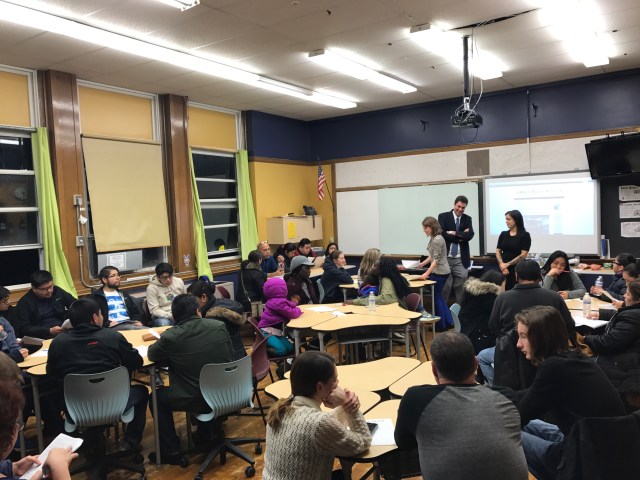
Our agenda consisted of greetings and introductions, reiteration of our program and what we are trying to accomplish, end goals of the trip, going over our itinerary, signing of the contract, and a Q & A.
After formally introducing themselves to the parents, Mrs. Mac and Mrs. Hesse proceeded to give the details on the actual program and some of the service work we would be doing there. They also talked about how the students would come back to our local community with their newly acquired skills and lead community impact projects. We then went over what a typical day in Ecuador would look like from day to night followed by signing of the contract.
During our Q & A, safety was probably the biggest concern for parents. But rest assured, Mrs. Hesse and Mrs. Mac put those concerns to rest. They made sure to have a reasonable chaperone to student ratio to ensure the safety of the students. Letting your child go out of the country is surely a scary experience but they made sure that we would be placed in safe hands.
A couple of parents left a few comments on their feelings about the trip. Julia Goings-Perrot, Elise’s mother, said she has no concerns for the trip since she finds Excelsior trustworthy. She also said, “I very much appreciate the opportunity for our kids to go. I wish I could go”. Many other parents echoed that and also said that they wished they were given this opportunity in high school.
Overall the meeting went really well. Any concerns were addressed and taken care of. Everyone left the meeting with nothing but anticipation for our upcoming trip!
The moment when we all found out we were all going to Ecuador was such a huge surprise! We were all so excited and somewhat awestruck at the immense opportunity that had been given to us.
Our teachers recorded our reactions as we opened the letters determining whether we were going to Ecuador or not.
Within a few weeks time, we not only found out who was going, but also found out that our trip was being funded, thanks to the generosity of the FLYTE organization. After the initial excitement settled, we began to wonder, now what? With the rest of the meeting we discussed plans to come up with a formal contract and continue fundraising.
After the announcement day, we decided we needed to meet every Tuesday after school to ensure that we were prepared for everything we needed for the trip, including fundraising money to support Casa Victoria and for excursions once we are in Ecuador. We decided to fundraise at school events and hold a raffle. For the raffle, we decided that the best thing to do to get the word out about our program was to highlight some of the businesses in our city. We created a pitch and asked local businesses for donations to a Best Of Newburgh
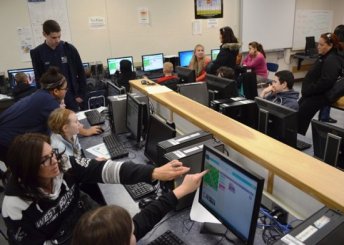
Hour of Code event at Excelsior Academy
basket. Now we are selling raffle tickets with the opportunity for winners to get over $500 in gift certificates to local salons, restaurants and even a game to our local AAA baseball team. One of the events that we fundraised at was our school’s annual Hour of Code. At the event, Global to Local members sold concessions, promoted the raffle and helped teach coding to people of all ages. Activities ranged from simple games, to website building, to even working robots.
The contract was drafted and finalized by Mrs. McCartney, Mrs. Hesse and Mr. Rothman. The document outlines the specific rules each student has to follow in Ecuador and what is expected of them up until the time of the trip. Now that the contract is finalized, we have planned a Global to Local Parent meeting. At the meeting we will be discussing the contract and the expectations of the students while in Ecuador.
The Foundation for Leadership and Youth Travel Education (FLYTE) has announced a partnership with Excelsior Academy’s Global to Local. In an effort to support Newburgh students as they build leadership skills to become positive change agents in our community, FLYTE will provide up to $35,000 of funding and travel support for fifteen students and five chaperones from the Newburgh Enlarged City School District to travel to Quito, Ecuador during the summer of 2017 to engage in a global service learning project. During their ten day stay, students will volunteer at Casa Victoria, a grassroots community organization which provides after school academic support and hot meals for at-risk youth. In addition to supporting the library, teaching basic robotics, and working on a site-based project, students from Excelsior Academy will also engage with a leadership curriculum, so that when they return to Newburgh, they are better equipped to act as project managers for their entire grade during Community Impact Projects. They will also visit the Amazon rainforest, travel to El Mitad del Mundo at the Equator and visit the home and museum of Ecuadorian artist and human rights activist, Oswaldo Guayasamin.
Students from Excelsior have started fundraising to support Casa Victoria and their volunteer work, and have visited various local businesses and organizations to speak about their goals for global service learning and subsequent Community Impact Projects in Newburgh. Student Taina Caballero said, “Being able to change the community and the world around us for the better is mindblowing. Just knowing that this organization can turn into something so much larger is truly exciting and I can’t wait to be a part of this journey.”
FLYTE is a nonprofit agency providing funding, teacher support, and itinerary planning for high school students in underserved schools to provide summer study abroad trips. These trips promote cross-cultural understanding, develop interpersonal skills, and reaffirm a sense of global awareness and participation. Through a better understanding of the world and by gaining international experience, students will pave a pathway to adulthood that expands beyond their immediate community and makes them a global citizen.
Global to Local is a student-led organization under the guidance of Newburgh Free Academy educators Christine McCartney and Jacquline Hesse. You can learn more about their work and follow their travels on their website at http://www.globaltolocal.wordpress.com.
How do we build the sustainability of the program?
How can we create a valid and unbiased application process?
What opportunities exist to leverage expertise from our various stakeholders?
How can we make the experience valuable to the students who do not travel with us?
What further partnerships can we create to support our work?
What experiences should be part of the trip outside of service-learning?
What planning needs to happen with our service partner(s)?
How do we provide our students with an experience that pushes them to their “learning edge” (for both international service-learning and their Impact Projects)?
For the Impact Projects, how do we balance student interest and authentic community needs with manageability?
If you are reading this blog, we will most likely be seeking your input in the weeks to come. This leads to our final thought: we are so lucky to work in a space where this amazing idea can become a reality.
Scientists in Galapagos believe they can restore a species of tortoises that is extinct. They will do so by copying DNA from Lonesome George, a Pinta Island tortoise who was the last of his kind. He died in 2012 as the Charles Darwin Research Center was desperately attempting get him to mate. Promisingly, scientists from the United States and Ecuador believe that a “copy” will have up to 95 percent matching DNA.
#2 Pirates loves tortoises as much as buried treasure.
One of the main reasons for the near extinction of Galapagos tortoises is the fact that they can live for almost a year without food and water. This made them an easy food source for pirates, who would load their ships with the tortoises. The doomed tortoises would just wander the decks of the ships, waiting to be eaten. According to the internet, they taste sweet and tender. Ugh.
#3 Even Darwin liked to eat the tortoises!
Charles Darwin and his crew took thirty tortoises to eat when traveling by boat to Polynesia. Enough said.
#4: Marine Iguanas can dive way deeper than you can.
The male marine iguana can dive thirty feet under water without any help from the equipment you or I would need (unless you are a practiced diver). Interestingly, they are also the only lizard that forages in the sea. They are everywhere in Galapagos, but each island has a species with unique adaptations that have evolved over hundreds of years. After they dive to feed on algae (yes, they are vegetarians too) they warm themselves on the dark lava rock, often piling on top of each other, until their body temperatures have risen. Marine iguanas are threatened by non-native animals, such as rats and dogs, who feed on their eggs and their babies.
#5 Galapagos penguins take dating seriously.
Galapagos penguins mate for life. They are the only penguins to breed north of the Equator in the wild. There are fewer than two thousand of them left in the world. Since they breed along the edges of the land, mainly in crevices of old lava flows and caves, sea level rise affects their chances of survival.
#6 The Hokey Pokey just got attractive.
Male Blue-footed Boobies stamp their feet to attract females. Approximately one half of all Blue-Footed Booby mating happens on the Galapagos, and interestingly, the bluer a male’s feet are, the more attractive they are to the females. This guy is a seven: 😉
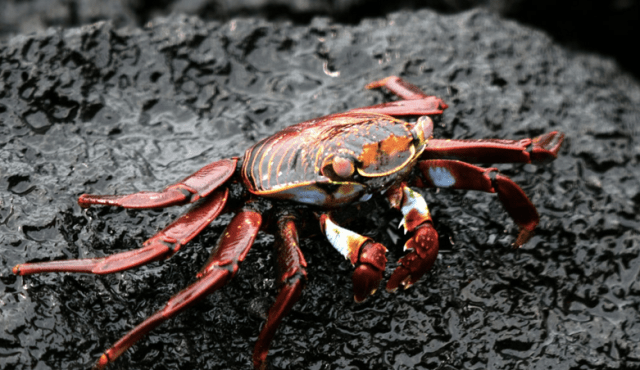
#7 Crabs are everywhere!
…and they are really hard to catch. They are infamous for scuttling away into the lava crevices as photographers get close. Although in youth, they are black to match the rocks and protect them, as they get older, they take on all shades of red, blue and yellow. Called Sally Lightfoot crabs, they are not eaten by humans, but used as bait by fisherman.
#8 Swimming with Sea Lions is AMAZING!
Does this really need an explanation?
p.s. excuse you
#9 One white-tipped reef shark grows more teeth than 200 people.
With tens of thousands of teeth throughout their lives, it’s a good thing these sharks aren’t aggressive towards humans…especially since the snorkeling video above was taken in the same waters about ten minutes after this video:
#10 Our actions all over the world impact the Galapagos Islands.
Both global climate change and pressure from human activities impact the ecosystem function and the natural recuperation of living communities on the Galapagos Islands, on land and in the water. Sea level rise, caused by global warming, will reduce the beach areas necessary for the nesting and breeding in many species. Higher sea surface temperature, as well as ocean acidification threaten marine species; both of these occur as a result of too much carbon-dioxide in the atmosphere, which is created by the human use of fossil fuels.
Galapagos Islands’ ecosystems are also threatened by invasive species and tourism contributes directly to this. More than one quarter of the insect species on the archipelago are invasive, arriving on boats. We had to be conscious as we moved from island to island and our bags were sprayed with pesticide when we flew in. In addition, we recognize that as travelers, we added to the human impact on the islands, even though we stayed at a eco-conscious resort. The boats we traveled in, the waste we created, the energy we used for hot water and the food we ate all impacted the islands we visited. We hope that we can offset this negative impact with our renewed commitment to environmental activism that we will share with our students.
We are inspired by a local non-government organization on Santa Cruz island called Lonesome George and Company. They partner with organizations that educate young people on Galapagos, helping them to see that their choices do have an impact on the world. This is a message for all of us.
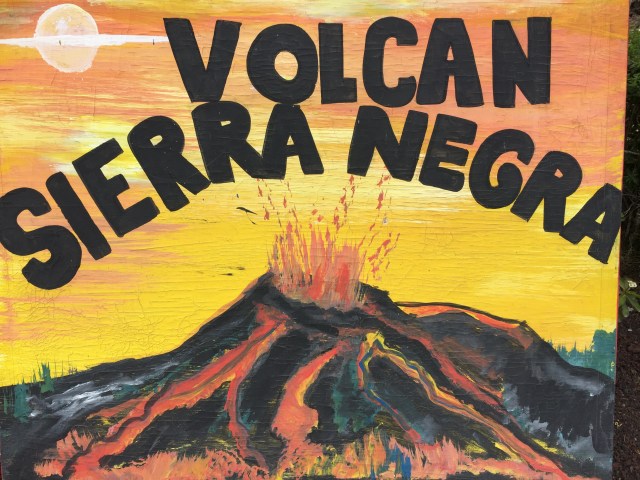
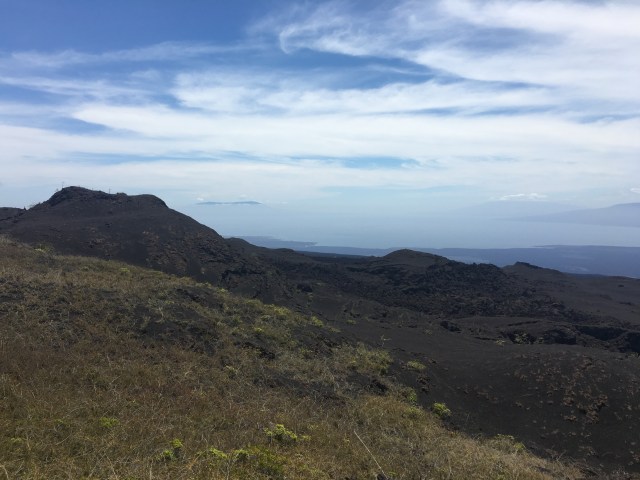
When we got to the top of Sierra Negra, the first comment out of Ms. Mac’s mouth was, “I’ve seen what Mars is like…and I don’t love it…” 🙂 It wasn’t so much the amazing and unique scenery at the hottest portion of our hike up Sierra Negra, but more the deliriously blazing sun that attacked from all directions, beaming overhead and reflecting off of the sparkling black magma rocks at the top. Although the volcano hasn’t actually erupted in 11 years, this picture from the tour guide shop pretty much sums up how it felt at the top:
The beginning of the hike was fantastic. During the one (of two!) seasons in Galapagos, the cold South Equatorial ocean current flows around the whole archipelago and causes the air temperature to drop, marking the arrival of garua season, during which clouds and wet air envelope the highlands. It is not rain, but rather a super-fine mist that you can actually see blowing in the winds, as if you are in a thin cloud. As we set out on our hike, we were surrounded by this and enjoying the cool, almost tactile feeling it provided.
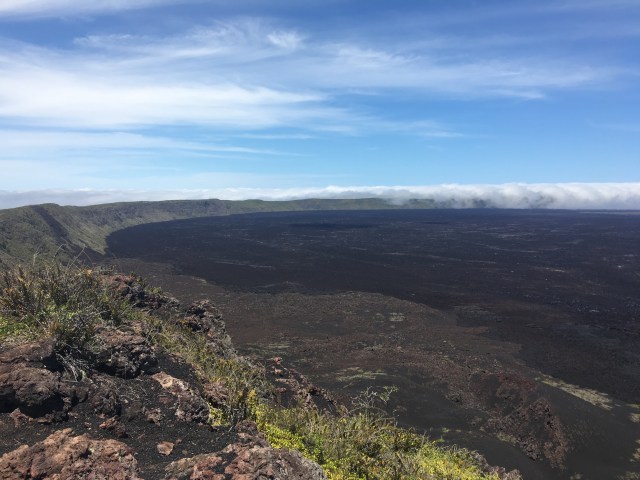
When we reached the center of the volcano, we couldn’t believe how vast the caldera (center crater) was -about 4 miles by 6 miles wide! At 4,890 feet, it is the largest and most active volcano in Galapagos. It is approximately 535,000 years old, which is relatively a baby in terms of land masses on the planet. Prior to the 2005 eruption, the GPS monitoring on the volcano did not record any activity, meaning that it could erupt at any time, without warning!
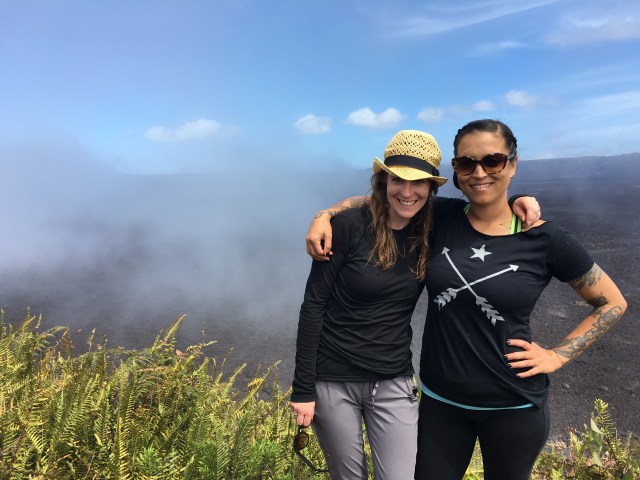
Here we are at the top of the caldera. Notice that we are just emerging out of the gurua behind us. Little did we know how much that mist was protecting us from the sun.
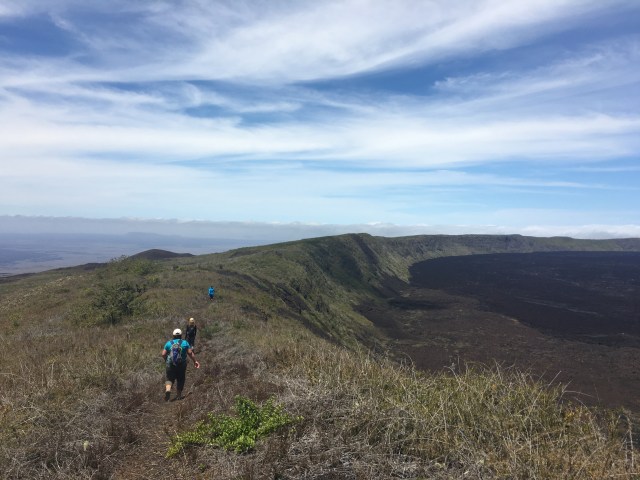
Here is a portion of the caldera…you can see how enormous the rounded edge is. We did not walk around the entire thing, as the sun was entirely too hot and the distance too long. Geologic time was evident; we could see different types of lava from various eruptions, some that had flowed smoothly over the ground, and some that were rocky and slid under our feet. The only comparison we came up with was that it was like standing on the edge of the Grand Canyon, but the colors were like nothing we had ever seen.
Here is a video of our guide discussing some common misperceptions about Sierra Negra and the surrounding area.
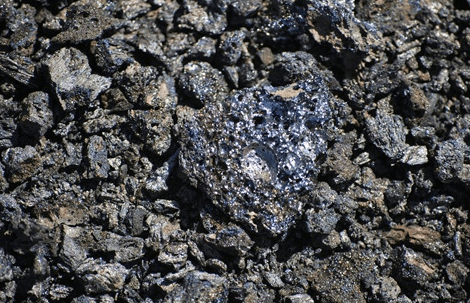
Although the view of the landscape was beautiful, what was under our feet was even more astounding. The black lava shined like diamonds. It was incredibly tempting to pocket a piece, but we restrained ourselves partially because it is illegal to take anything from a protected area. Officials actually search your bag when you arrive at or leave one of the islands. But more so because we also recognize that it is unethical -imagine every person who walked up here stuck some in his/her pocket.
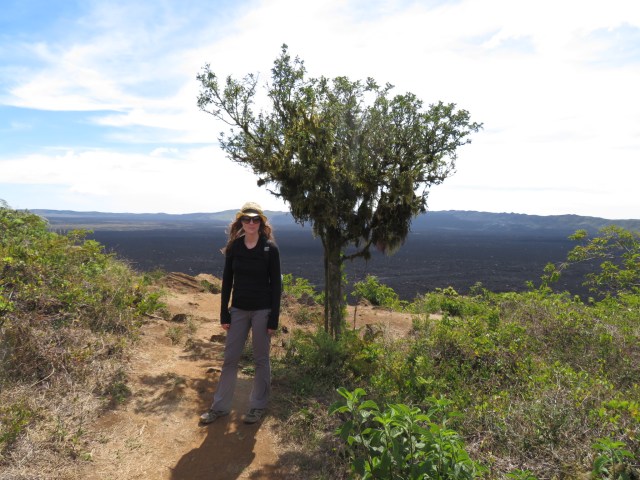
The descent was also steaming hot, but we found one tree for a brief respite.
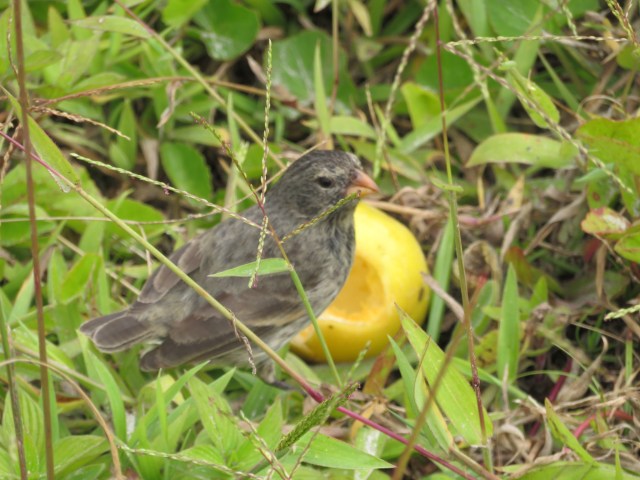
You will notice that Mrs. Hesse has sooo much clothes on for how hot we described it to be…that was because you had to be fully covered from the sun to avoid getting a bad sunburn and dehydration. Luckily, there was a ton of guava growing all over the side of the paths to help quench our thirst:
The finches from the island also love this treat.
By the end of the hike, we were exhausted.
…but still had some snorkeling left in our day. More to come!
Today we woke up and were out walking before the sunrise, checking out the Pelicans and other indigenous birds. The sea lions are particularly active in the water during this time, which was fun to watch.
We are both very appreciative of our early morning and evening walks together, as it gives us some time to process the whirlwind of adventures we have been having. Each day, as soon as breakfast is over, we are off to a scheduled adventure, so this time to relax and reflect is priceless…plus sometimes we have some fun:
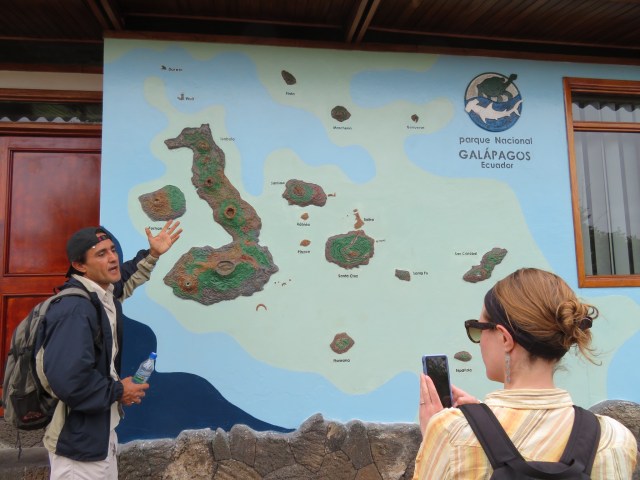
We were off to the Charles Darwin Research station right after breakfast, where we met our new guide, Patricio, who would be with us for the rest of our time in Galapagos. It was interesting to learn so much from him about the islands, the wildlife, the ecosystem and the people. Patricio has been a guide on Galapagos for sixteen years, having been a professional diver (who has trained NAVY Seals in diving AND been attacked by a shark!) One of the best parts of this trip has definitely been meeting people and hearing their stories. Here we are learning about the islands and how the ocean currents affect the climate on each island.
We also had an opportunity to see some new reptiles and turtles and to learn about how they are trying to repopulate certain species that are endangered…and even one type of giant tortoise that has gone extinct, but whose DNA was found in another type of turtle that is a hybrid of two different kinds! 😮
We saw tons of crabs and our first blue-footed boobies!
Mrs. Hesse was at first afraid to go snorkeling; she didn’t feel comfortable breathing underwater. With some help from our professional diver and guide, she conquered her fear. As we snorkeled, we swam over a huge school of translucent white fish and Mrs. Hesse even got to see a black-tipped reef SHARK!!!
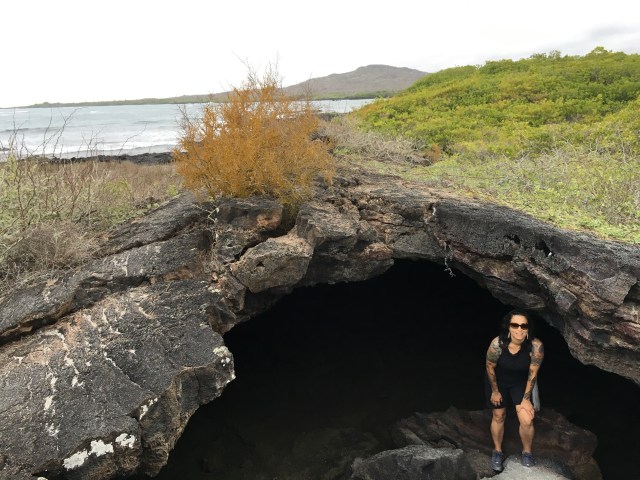
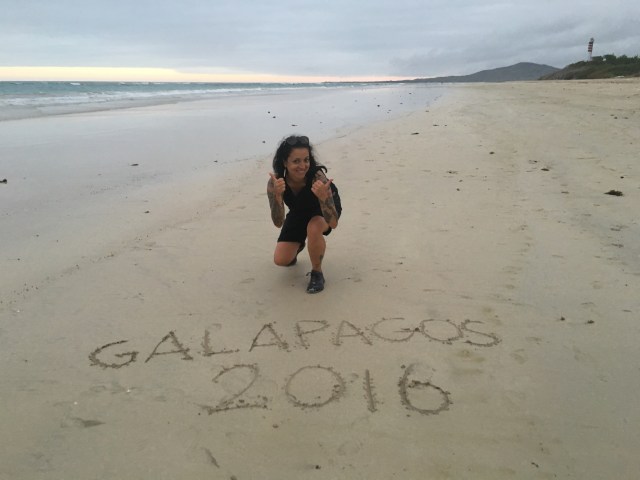
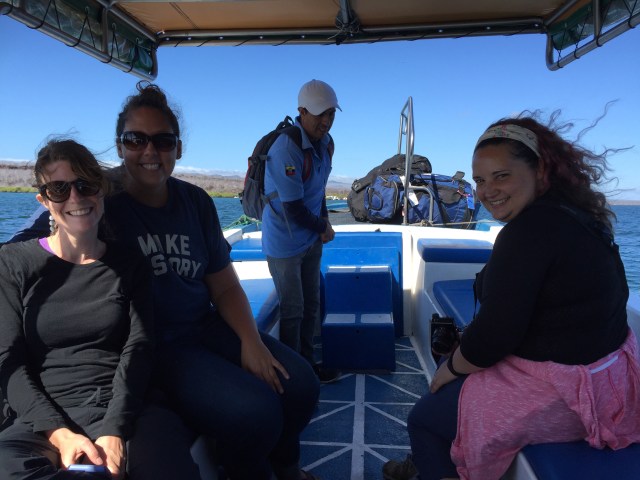
The boat ride to Isabela was rugged. One passenger was vomiting regularly. We both did okay and were glad to arrive on the beautiful island safely. It was late in the afternoon, but we immediately set out to explore the miles of gorgeous beach and mangrove forests right outside of our hotel room, where we found a cave and some beautiful wetlands before heading to bed…another great day exploring!
We had a two hour flight to Baltra, an island that contains nothing but an airport and some native trees and bushes. The flight was kind of rough and for Ms. Mac, who does not like flying, the three children sitting behind us, who all screamed in sheer terror as the plane took off, made it a bit harrowing. But we landed safely, yet were only half way to our destination. We were next ushered onto a small boat for a half hour cruise over to Santa Cruz island, where we took a pick up truck for another 45 minutes, before arriving at our hotel.
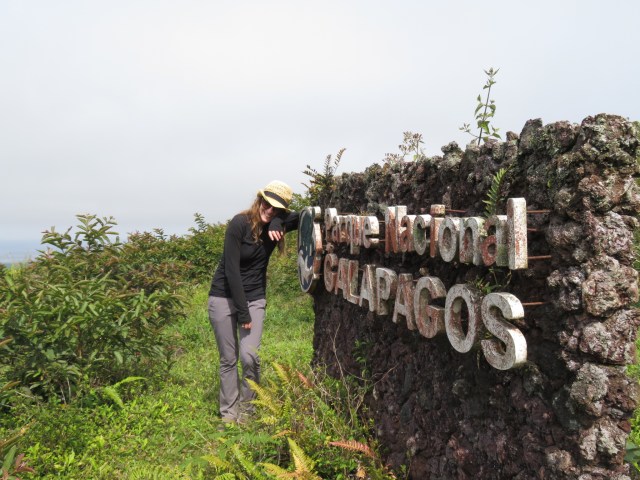
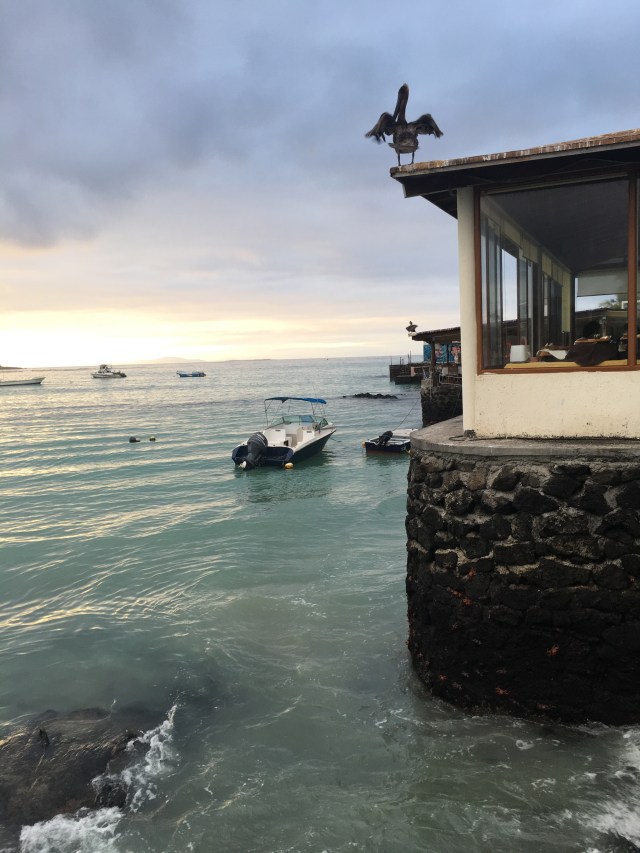
Immediately immersed in nature, we were so appreciative to be in this awe-inspiring place by the ocean. As we walked out the door of our hotel, onto the back deck, we were surrounded by at least seven lounging sea lions and piles of Marine Iguanas.
After a nice meal, we were whisked into a car and journeyed to the highlands of Santa Cruz. There, we visited a sanctuary for giant tortoises, who we learned can live to be 160 years old! The Ecuadorian government is working to prevent the extinction of these creatures, as several distinct species have already gone extinct. We were up close and personal with the tortoises, but we were told not to touch them, not only to honor their space, but because their shells are contaminated with salmonella.
Our first guide, Ricardo, was born here, and shared stories as we drove about when his grandmother moved to Santa Cruz over 70 years ago. At that point, there was no town on the island, but she was tied to the beauty of the place and stayed. She had twelve children, and our guide pointed out several places where his family members live. He seemed genuinely thankful for being a part of this close knit community.
We also visited some collapsed lava craters that day. It is interesting how the island is made up of volcanic mass, and as the lava flowed across the land, it created hot streams through the ground which eventually cooled into tunnels.



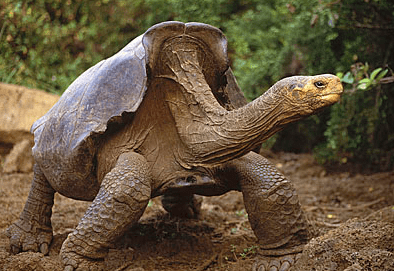 Scientists in Galapagos believe they can restore a species of tortoises that is extinct. They will do so by copying DNA from Lonesome George, a Pinta Island tortoise who was the last of his kind. He died in 2012 as the Charles Darwin Research Center was desperately attempting get him to mate. Promisingly, scientists from the United States and Ecuador believe that a “copy” will have up to 95 percent matching DNA.
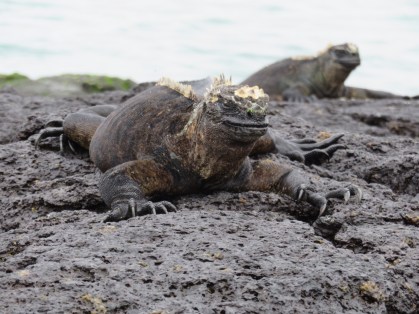 The male marine iguana can dive thirty feet under water without any help from the equipment you or I would need (unless you are a practiced diver). Interestingly, they are also the only lizard that forages in the sea. They are everywhere in Galapagos, but each island has a species with unique adaptations that have evolved over hundreds of years. After they dive to feed on algae (yes, they are vegetarians too) they warm themselves on the dark lava rock, often piling on top of each other, until their body temperatures have risen. Marine iguanas are threatened by non-native animals, such as rats and dogs, who feed on their eggs and their babies.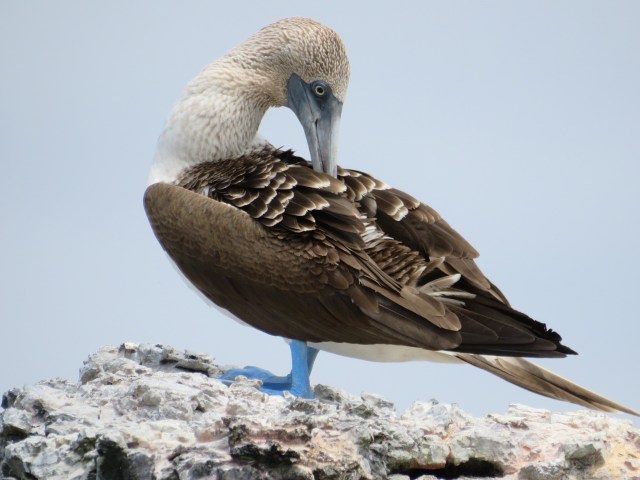











 globaltolocal